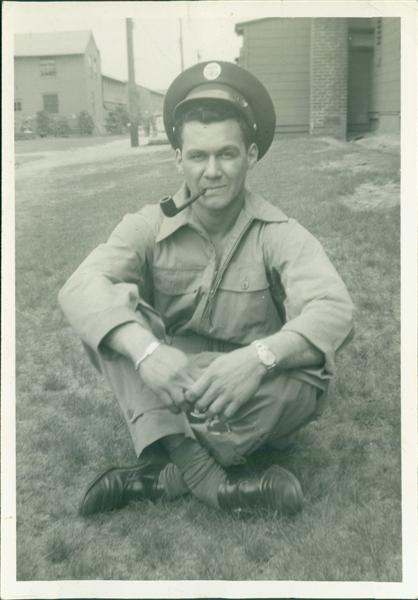
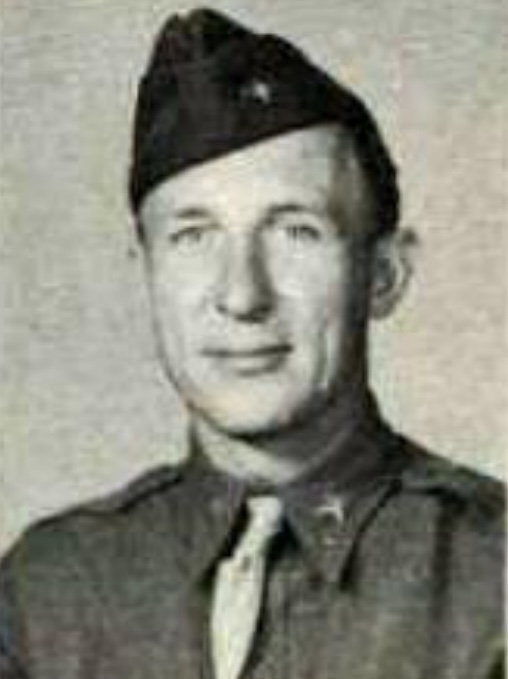
On 27 September 1944, B-24H Liberator Eileen (42-50324, squadron code WV-S) lifted off from Tibenham with the 702nd Squadron, bound for Kassel. At the controls was 1st Lt. Donald E. Brent, a steady, mechanically-minded Oregonian who had worked the railroads and dreamed of being a locomotive engineer. It was his thirty-third mission. Beside him sat co-pilot 2nd Lt. Walter Eugene George, a 20-year-old architecture student from Texas. The two flew as one mind: “We were in harmony as a team, as pilots,” George remembered. “I knew what he was thinking before he said, and he knew what I was thinking.”
Radio operator T/Sgt. Sammy Weiner felt the dread before takeoff — the breakfast pancakes were so cold he took only coffee. “A week later,” he wrote, “I would have given a year of my life for a stack of those soggy cold cakes.” Over the target an undercast forced instrument bombing, and Brent’s voice came joyous over the interphone: they were heading home, only two missions to go. Then a navigational error pulled the 445th out of the bomber stream and stripped away its escort, and the Luftwaffe fell upon the isolated group. “The skies were suddenly filled with Focke-Wulfs 190s that had risen out of nowhere for the kill,” Weiner recalled. “There were three simultaneous attacks, one up through the bomb bay.” A 20mm shell tore through his transmitter and into his leg.
What George did next was extraordinary. With the bomb bay a wall of flame — the fuel gauges “spitting like blowtorches” — he ran the burning catwalk to reach the door switch: “I could jump through all of this flame on the catwalk to get there, and I hit the switch on the way over … and the bomb bay doors opened.” He hauled top-turret gunner Constant Galuszewski from his turret, snapped a parachute onto him, and went out himself. Weiner was thrown clear when the ship tore apart: “There was a sudden, thunderous blast and the plane broke completely in two … throwing me out into the welcome blue space.” He fell some six thousand feet before pulling his cord; George free-fell most of 23,000 feet to stay below the fighters, opening his chute at treetop height with his oxygen mask melted to his burned face.
Only three men survived — George, Weiner, and Galuszewski, all taken prisoner. The aircraft burned into three sections before crashing about 2.5 km southeast of Ulfen. Galuszewski, though beaten by civilians, later identified the wreck “by its name Eileen and by our squadron markings.” Six men did not come home: bombardier Harold Mercier and gunner Donald Larsen, killed by the fire that raked the nose; nose gunner George Linkletter, waist gunner Milton Smisek, and tail gunner Woodard Watts; and Brent himself, who bailed out about a minute before the ship burst but whose chute was found with its shroud lines severed, and who was believed killed on the ground. George never stopped honoring the pilot he flew beside. Decades later he handed Brent’s family the pocket Bible he had carried, telling them, “This rode next to Brent on 17 missions.”
Sources: Eugene George interview with Aaron Elson (2001); Sammy Weiner memoir, “The Fatal Twentieth Mission”; Walter E. George letter to the War Department (1945); Individual Casualty Questionnaires and German crash-data sheet, MACR 9388. KMHS archive.
B-24H #42-50324(Hardstand 23) "Eileen" Call Letter S (Sugar)
HIGH RIGHT ELEMENT

Crashed 2.5 Km Southeast of Ulfen, Germany - MACR 9388