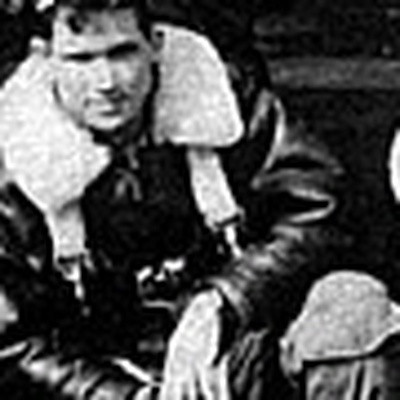
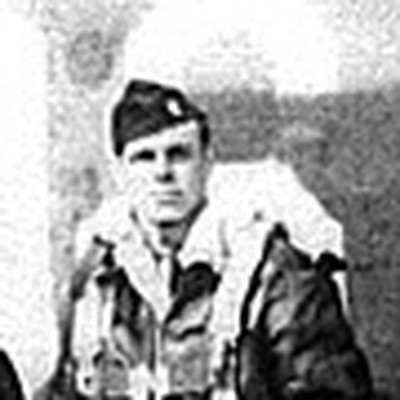
The crew of 1st Lt. Oliver B. Elder flew B-24H Liberator #41-29579, the ship the men called Clay Pigeon, with the 703rd Squadron. On 27 September 1944 they led the low-left element of the formation bound for Kassel — on what would become the costliest single-battle loss any American bomber group ever suffered. Waist gunner S/Sgt. John L. Durr, twenty, of Cincinnati, had shipped over aboard the Queen Elizabeth, arriving at Glasgow on D-Day; his hope that “our crew wouldn’t fly any missions because the war would be over … vanished very quickly.” By late September he was on his 23rd mission, having “never seen a German fighter plane on any of my first twenty two.”
Kassel changed that in an instant. After the off-course group bombed near Göttingen and turned back without escort, it was set upon near Eisenach. “A short time later, Stanley Morse, the tail gunner, shouted ‘fighters’ on the intercom,” Durr recalled. “He fired several volleys and then opened the hatch and bailed out.” Durr never forgot his crewmate’s fate: “I will always wonder what happened to Stanley, since he was listed as KIA.”
Then the fire reached Durr. “A hole more than large enough to fall through was blown in the floor about three feet from me and a bullet hit my lower left leg, shattering the bones,” he wrote. “I was also hit in my right eye by a cannon shell fragment which later resulted in a false eye.” Wounded, he bailed out and watched three Me-109s circle him as he came down — not to fire, he realized, but “to alert people on the ground.” He landed in a meadow, was taken prisoner, and survived captivity at Stalag IXC until an American spearhead freed him on 2 April 1945.
Of the men aboard Clay Pigeon, pilot Elder, tail gunner Morse, and radio operator T/Sgt. John J. Donahue were killed; Ellender, Whidden, DeVries, Deckert and Durr became prisoners. Donahue’s death was not, strictly, a battle death. As Michael Buettner reported in the Petersburg Progress-Index, the twenty-year-old radio operator was among a group of downed airmen murdered by a Gestapo-led mob at Nentershausen that afternoon. “Brief as it is,” Buettner wrote of the “Killed in Action” on Donahue’s gravestone, “the inscription is unintentionally misleading. John Donahue was not, strictly speaking, killed in action. He was murdered.” Several of the perpetrators were later tried and hanged. Donahue had been awarded the Distinguished Flying Cross only months before; his mother, a relative recalled, “grieved for him for the rest of her life.”
Durr, who lived to retire from Wright-Patterson Air Force Base in 1976, closed his memoir with the survivor’s burden: “I feel very fortunate to have survived this experience while four of our crew and so many of the 445th lost their lives.”
Sources: John L. Durr, “My Kassel Mission Story”; KMHS crew photograph with annotated caption; Michael Buettner, “The Fallen and Forgotten” / “Murder in Midst of War,” Petersburg Progress-Index (May 2009). KMHS archive. (Crash site ~1 km SW of Lindenau; the ground murders occurred at Nentershausen.)
B-24H #41-29579 (Hardstand 10) 'Clay Pidgeon' Call Letter N (Nan)
LOW LEFT ELEMENT

Crashed 1 Km Southwest of Lindenau, Germany - MACR 9387