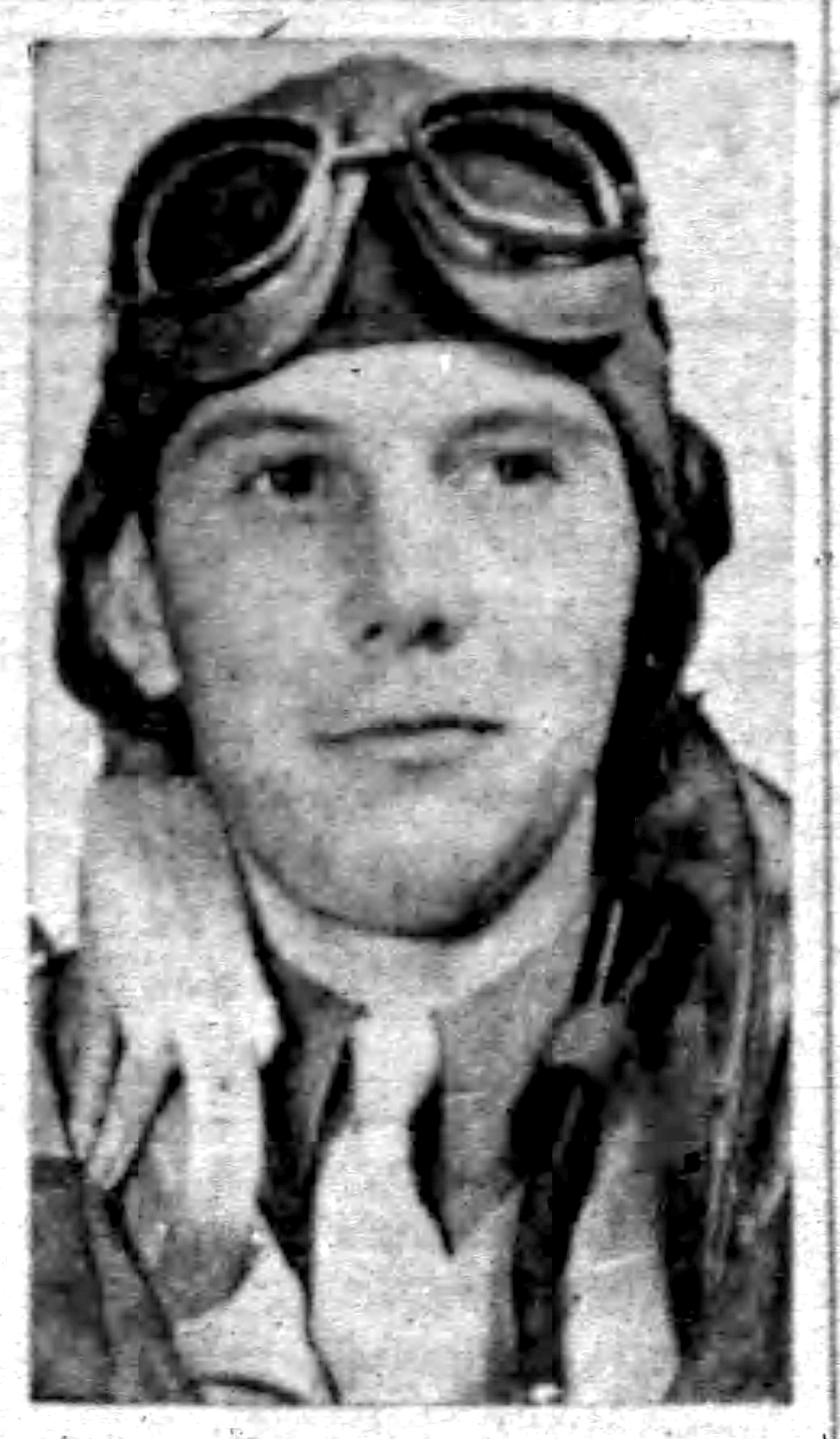
On the morning of 27 September 1944, 2nd Lt. Palmer M. Bruland climbed into a B-24H Liberator he barely knew, with a crew he had never met. His ship was Texas Rose, serial 41-28922, of the 701st Squadron, flying out of Tibenham against the marshalling yards at Kassel. Bruland and his co-pilot, 2nd Lt. Peter S. Belitsos, had been thrown together with a borrowed crew only hours before takeoff. As Belitsos later wrote, he was tapped on the shoulder before dawn and told he was flying with Bruland’s crew: “I was taken to the hardstand where I met Palmer Bruland for the first time. I introduced myself… This took place before dawn and I did not meet the rest of the crew or see them face to face except for the engineer.”
The Kassel Mission became the costliest single-group air battle of the Eighth Air Force. When German fighters fell on the 445th, they struck with annihilating speed. Belitsos remembered no warning at all: “The first sign for me was a thud that shook the plane and then the inboard engine on my side caught fire. Simultaneously I saw that almost all of the planes in my line of vision were on fire.” Bruland took over the controls as Belitsos worked the feathering procedure with the engineer; the fire would not go out. They nursed Texas Rose down from 20,000 feet, hoping to reach France, but at last the order came to bail out. “Everyone cleared the plane,” Belitsos wrote. “Bruland was the last man out.”
All nine men aboard parachuted alive. The German crash report (MACR 9386) records the Liberator going down near Gießen at about 11:25, “durch Jäger beim Rückflug” — by fighters on the return flight. Yet survival in the air did not mean safety on the ground. Two of the gunners reassigned to this scratch crew that very morning — nose-turret gunner S/Sgt. Ferdinand K. Flach and waist gunner S/Sgt. Lee R. J. Huffman — came down by parachute, were taken prisoner, and were then murdered by German military personnel. The crash sheet marks both men with the single German word tot — dead — while their seven crewmates are listed as POW.
The killings became a United States war-crimes case, tried at Dachau in 1946 (Case No. 12-472, United States v. Hermann Noack and Karl Georg Boess). The court found that two captured, unarmed American airmen were driven from the village of Hattenrod under guard, marched into the fields, and shot. A witness testified that as one body lay in an open field, Hauptmann Hermann Noack — a former Luftwaffe paratrooper who ran a local Hitler Youth camp — was reported to have said, “Revenge for the first sergeant.” Each man had been shot under the pretense of “attempting to escape.” Noack was sentenced to death by hanging; his driver, the butcher Karl Georg Boess — whose own teenage son had been killed when his train was strafed by Allied planes shortly before — received eight years.
The Society’s archive preserves the long aftermath. A memoir by an American officer who served at Landsberg War Crimes Prison records that Noack escaped one stormy night by a knotted bedsheet rope, was recaptured and shot in the leg (later amputated), attempted suicide, and was finally hanged on 21 March 1947. Asked for his last words, “Noack mumbled barely audible words saying he was not angry at the two pilots.” Lee Huffman rests today beneath a grave marker at the Netherlands American Cemetery, Margraten. He and Flach were on Bruland’s plane for one mission, strangers to the men beside them, and they did not come home.
Sources: Peter Belitsos, “Fill-In Co-Pilot,” The Kassel Mission Reports, Addendum 1994; German US Aircraft Crash Data sheet, MACR 9386; Bruland crew photograph and roster; Review and Recommendations, United States v. Hermann Noack and Karl Georg Boess, Case No. 12-472 (1946); Tom Atkinson, “Captor & Captive” (Girtman Press); Lee Huffman grave-marker photograph, Margraten, courtesy Jean Vankan. KMHS archive.
B-24H #41-28922(Hardstand 34) "Texas Rose" Call Letter Q+ (Queen)
Crashed in Germany MACR 9386
SLOT ELEMENT