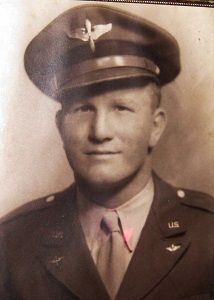
On the morning of 27 September 1944, 2nd Lt. William R. Dewey lifted his B-24J off the runway at Tibenham for his eighth combat mission. His aircraft was number 855, nicknamed A-Abel — the ‘A’ ship of the 701st Squadron. The target was the Henschel works at Kassel. Forty planes were dispatched in four ten-ship squadrons; three aborted. Dewey flew left wing of the lead element of the high-high-right squadron, and could not have known the day would become the worst single-mission loss any group suffered in the war.
After bombs-away the group turned for England, and the Luftwaffe’s Sturmgruppen fell on them. Dewey’s tail gunner, Ruben “Monty” Montanez, called it first.
“I see fighters, I see flak.” Then the entire plane began to shudder and shake, with the guns in the rear firing simultaneously and from the impact of 20mm and 30mm enemy shells. — William R. Dewey, “Divine Providence,” 8th AF News, 1989
The intercom to the rear was severed within seconds; top-turret gunner Charley Craig reported five fighters on their tail. Then, in “maybe three to five minutes,” it was over. Only seven Liberators were left to form on the surviving pathfinder ship. More fighters at eleven o’clock low proved friendly — P-51s of the 361st Fighter Group, sweeping in to break up the slaughter.
A-Abel was wrecked but flying: the tail turret afire, both waist gunners and the tail gunner wounded, a huge hole in the right waist, control cables partly cut, and a three-foot hole in the wing behind the No. 3 engine spilling 100-octane fuel into the slipstream. With the waist out of oxygen, navigator Herb Bailey took over the nose turret while nose gunner Les Medlock made trip after trip through the bomb bay carrying oxygen bottles to the wounded, covering them with his jacket and giving first aid.
Rather than risk ditching in the Channel, Dewey chose to nurse the ship to the nearest field to get his wounded to a hospital faster. He called air-sea rescue — “Colgate” — which fixed his position and gave him a heading, while an enemy 109 trailed below for minutes waiting for them to fall. About an hour later they broke through the cloud to the white cliffs of Dover and the long runways of RAF Manston.
“The landing gear went down and locked perfectly, the flaps went down all the way and the tires were fully inflated. The landing was one of the best I ever made in a B-24 — like we were on feathers. A day we will never forget — 27 September 1944!” — William R. Dewey
Decades later, William Dewey founded the Kassel Mission Memorial Association, gathering combat reports, German records and survivor accounts — American and German alike — into The Kassel Mission Reports and the Kassel Mission Chronicles, and helping dedicate the 1990 memorial near Bad Hersfeld. “None of us bear any animosity,” he told schoolchildren that year. “We were doing our duty as soldiers, and they were protecting their country.”
Sources: William R. Dewey, “Divine Providence” and “Disaster at Kassel”; gunners’ combat narratives (Montanez, Johnson, Bartkow); KM Chronicles (1998). KMHS archive.
B-24J #42-50855 (Hardstand 40) Call Letter A+ (Able)
LEAD ELEMENT

Landed at Manston Emergency Field, Kent, England