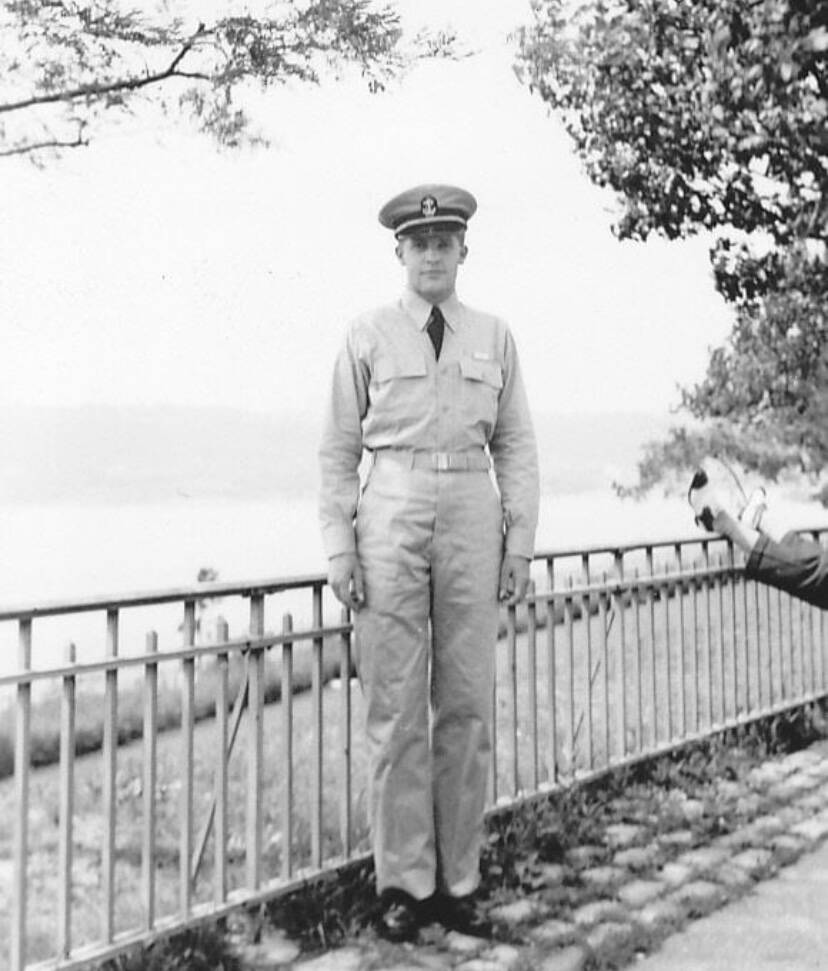
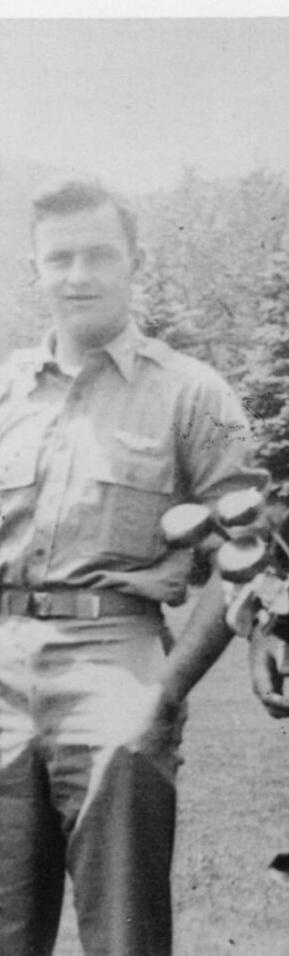
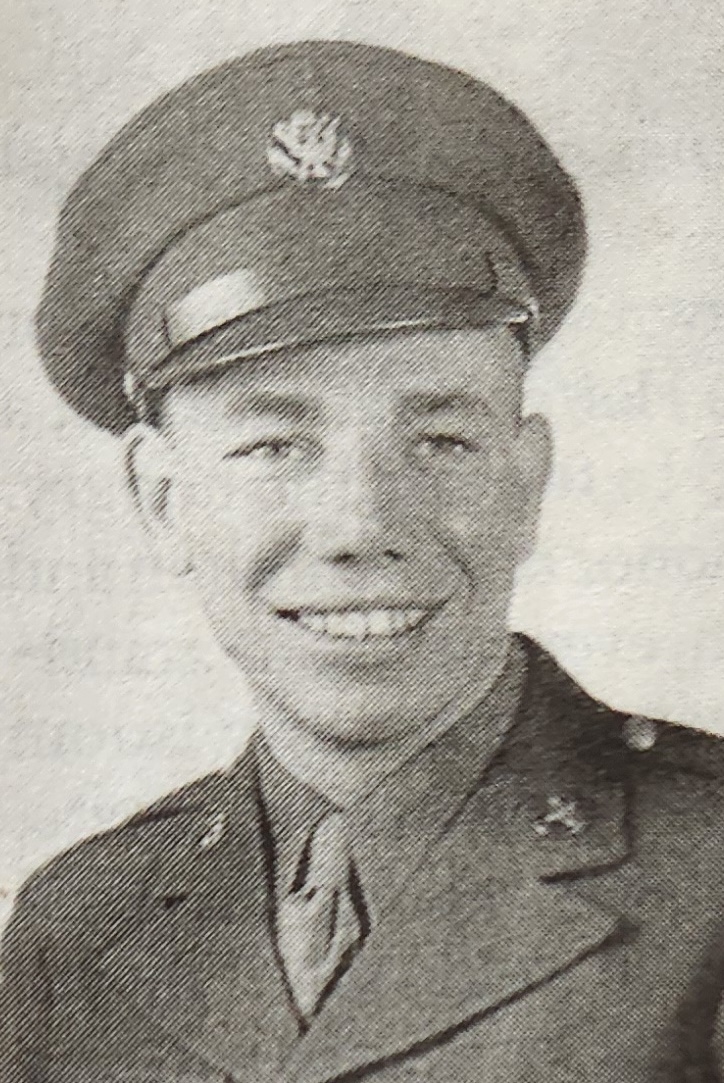
At 0215 on 27 September 1944, the charge of quarters woke the crew of 2nd Lt. Robert N. “Pappy” Hansen with word that briefing was at 0500. When the curtain came back from the map, the target was Kassel — deep enough to matter, but, as bombardier 2nd Lt. John C. “Woody” Woodley recalled, it “while far from being a ‘milk run,’ wasn’t too far into Germany, and we stood a good chance of getting back early for chow.” Their own ship, “fondly christened ‘Patches,’” had been marked off the board, so the men drew a reserve B-24H, #42-95078, and lifted off from Tibenham into a routine assembly over a 10/10ths undercast.
As the 445th turned off the target it drifted from the bomber stream and was left alone. Woodley remembered the false calm: “About 1000 we were all feeling good, and Pappy Hansen, our pilot, and I were talking about how lucky we were to have gotten a milk run.” Then the gunners called out fighters — co-pilot Herbert Bridges later estimated “approximately 150 FW 190’s.”
“20 MM shells were breaking in front, looking exactly like small flak bursts. They were pumping explosives into our midsection, and I saw several ships fall away, either exploding or burning fiercely… At this time I noticed that our left wing tip had been carried away.” — 2nd Lt. John C. Woodley, diary
Woodley fired until his turret guns went dead, then found “the midsection of the ship was blazing, and the fire extended as far forward as the rear of the nose wheel doors.” He crawled to the nose-wheel hatch: “About this time the ship gave a lurch, and out and away I fell.” The clearest record of the final moments comes from co-pilot Bridges, who in July 1945 wrote the War Department a careful account: the navigator, Porter Pile, wounded in the leg, “would not jump when told by bombardier”; waist gunner S. E. Howell, shot in the chest, was pushed out the rear hatch; tail gunner Ralph Bode stood ready to follow.
“Pilot, R. N. Hansen, was still at the controls and engineer, C. C. Palmer, and radio operator, J. M. Triplett, were standing by top escape hatch dubious about jumping. Since I was off oxygen, I went on out… right after bailing out, I looked up and could see nothing but two chutes.” — 2nd Lt. Herbert C. Bridges, casualty report, 1945
Of the nine men, only three lived. The German crash-data form (MACR 9396) records the ship going down between about 11:03 and 11:09 “Im Trottenwald (Oberschaar), 2 km südwestlich Richelsdorf,” the cause noted simply as “durch Jäger beim Rückflug” — by fighters on the return flight. Six were killed; Bridges, Woodley, and waist gunner Elwyn Hornsby were taken prisoner. Woodley’s descent read like deliverance: “Everything was very quiet and peaceful after the terrific din of engines and guns.” On the ground he helped interpret for a German woman, Margarete Scherer, who treated him and a badly burned gunner from another downed ship before they were carried off to captivity, and Stalag Luft I — where he kept the diary that preserves this story.
Sources: John C. Woodley diary and POW accounts; Herbert C. Bridges casualty report (1945); German crash-data form, MACR 9396; “Ex-POWs of Alabama” (1984). KMHS archive.
B24H #42-95078 (Runway 27) Call letter C+ (Charley)
SLOT ELEMENT

Crashed in Germany MACR 9396