The Kassel Mission — Interactive Timeline
September 27, 1944 · 445th Bomb Group · Mission 169

The Kassel Mission

One wrong turn. 100 German fighters. Minutes of devastation.
The greatest single loss of any group in the Eighth Air Force — and a story of reconciliation decades in the making.

Explore the Story ↓
0
B-24 Liberators
0
Airmen Aboard
0
Killed in Action
0
Taken Prisoner
0
Returned Safely

Early Morning · Tibenham, England

The Briefing

39 aircraft of the 445th Bomb Group are assigned to strike Kassel — a major German industrial center producing Tiger and Panther tanks. Captain John Chilton commands the lead ship. The men have done this before.

The 445th would lead the 2nd Combat Wing alongside the 389th and 453rd groups. Major Donald McCoy served as command pilot. Captain Web Uebelhoer flew deputy lead. Weather conditions were poor — thick undercast with cloud base around 3,000 feet and tops at 6-7,000 feet.

Read the full mission overview →


Approaching Target · Over Germany

The Fatal Wrong Turn

At the Initial Point, the lead ship should turn east-southeast toward Kassel. Instead, Major McCoy continues almost due east — toward Göttingen, 50 miles from the intended target. The fighter escort waits at Kassel. The 445th is now alone.

Multiple navigators in other aircraft detected the mistake immediately but couldn't alert the lead ship without risking mid-air collision with bombers behind them. Radio calls were met with only: "Keep it tight — Keep it together." The bombs fell on Göttingen. The fighter escort was nowhere to be found.

View the mission maps →

Trace the Flight Path

Watch the route unfold from Tibenham, England to disaster over Germany. Hover over each waypoint for details. The wrong turn at the Initial Point left 336 men without fighter escort.

ENGLAND FRANCE BELGIUM NETH. GERMANY English Channel North Sea INTENDED TARGET
Outbound flight Intended route to Kassel Navigation error Attack / Crash zones

Minutes Later · Alone Over Germany

100+ Fighters Attack

Between 100 and 150 German fighters descend on the unescorted formation in three devastating waves. FW-190 Sturmbocks armed with 20–30mm cannons tear through the B-24s. The attack lasts minutes. 25 bombers fall from the sky.

The 445th was roughly 100 miles behind the rest of the division — alone, without fighter protection. German ground controllers had vectored every available fighter to intercept. The air battle erupted over the Seulingswald forest between Bad Hersfeld and Eisenach. Only four aircraft would return to Tibenham.


Aftermath · The Human Cost

336 Men. 4 Planes Home.

117 American airmen killed in action. 121 taken prisoner. 12 murdered on the ground. The Luftwaffe lost 29 fighters and 18 pilots. Lt. Leo Lamb of the 361st Fighter Group was killed trying to save them.

Five American airmen were murdered near Nentershausen village; seven more killed elsewhere by civilians. The perpetrators faced post-war justice. For decades, the mission received almost no recognition — it was a failure, a defeat that the military preferred to forget.

View the master crew roster →


1985 · 41 Years Later

From Enemies to Friends

In 1944, twelve-year-old Walter Hassenpflug found an injured American navigator hiding by a creek. 41 years later, a letter reunited them — and transformed hundreds of enemies into lifelong friends.

Hassenpflug's own parents were killed by errant bombs just weeks after the Kassel Mission. The orphaned boy grew up in Friedlos — where the American lead ship had crashed. Decades later, his research led him to navigator Frank Bertram in San Francisco. Their reunion sparked a reconciliation that connected hundreds of German and American families for generations.

Read: From Enemies to Friends →


1990 – Present · A Living Memorial

A Story Still Being Written

On August 1, 1990, former enemies dedicated a memorial at the crash site near Friedlos — the first co-created by Americans and Germans. Every September 27, they gather to remember. In 2025, nearly 500 people attended a new memorial dedication in Grebenau.

Survivor Bill Dewey founded the Kassel Mission Memorial Association. New crash site memorials continue to be built. The Kassel Mission Historical Society preserves this legacy through podcasts, archives, and pilgrimages. Four airmen remain classified as MIA — the search continues.

Explore the memorial →

1Lt. William Dewey — Founder, KMMA
The Kassel Mission Memorial
Commemoration Ceremony
Memorial in Winter — Friedlos, Germany
The Baynham Crew
George Collar — Schaen Crew
The Dewey Crew
Original Mission Map — 445th Field Order

Their Story Isn't Over

Four airmen remain missing in action. New memorials are being built. Listen to survivors. Explore every crew. Help us keep their memory alive.
Recent News

It has been a busy and productive year for KMHS. Our activities have ranged from our ongoing efforts to recover and bring home our four remaining MIAs, to the KMHS Board’s adoption of a new five-year organizational plan. We are also making progress on the KMHS Archiving Project led by Linda Dewey and Trent Heidtke, and we recently participated in the 8th AF Historical Society Reunion.
Eighty years after the tragic Kassel Mission, the descendants of the 445th Bomb Group gathered in Germany to honor the fallen and celebrate enduring bonds of humanity. In this heartfelt reflection, Kiera Miner shares her grandfather’s story—his faith, his survival, and the German kindness that ensured generations could be born. The piece highlights the powerful 2025 memorial dedicated to his crew, led by local historian Andreas Heid.
When the Miner family arrived in Grebenau, they stood on the very ground where their father’s B-24 crashed in 1944 — and where, 81 years later, a new memorial now stands in his honor. Led by Andreas Heid and supported by the local community, the ceremony drew nearly 500 people, uniting Germans and Americans in a moving tribute of remembrance and peace. The day was filled with gratitude, reflection, and connection — a living testament to how history continues to bring people together.

KIAs

Podcast

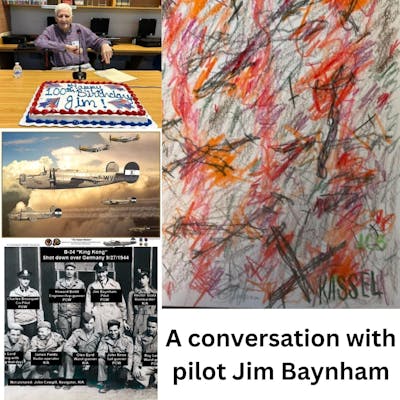
Fresh off a lecture about mechanized scooter safety in the halls of his assisted living facility, 101-year-old Jim Baynham sat down for a telephone interview with Linda Alice Dewey and Aaron Elson, hosts of the Kassel Mission Chronicles podcast. The last surviving participant of the battle between 35 B-24 Liberators and about 120 German fighter planes, Baynham had turned 20 only a few months before and was the youngest member of the crew whose lives were in his hands. I was a little late hitting the record button and missed the part about Jim's class on scooter safety, but fortunately Jim puts out a sort of blog by email and text, and this morning the following arrived: "We did it. Actually tested those of us scooter drivers who turned ourselves in. We reported to the residents lounge, carefully threading our way through the spaces between the chairs and table. Carefully, it was no time to have an accident. So we were directed to form a line in preparation for a drivers test among pylons set up in the main hallway. Those of us who successfully navigated the course without knocking over a pylon got a certificate attesting to our successfully completing the test. It was a pretty impressive event. That hall full of old folks showed up and proved we coud still tame our impulses to run over someone and act like we were normal folks with concerns for our fellow man. It was pretty impressive. Love, Dad, Grandpa, Uncle, Jim." credit: Kasselmission.org For more on the Kassel Mission: https://www.kasselmission.org For more about the podcast hosts: https://www.lindaalicedewey.com https://aaronelson.substack.com
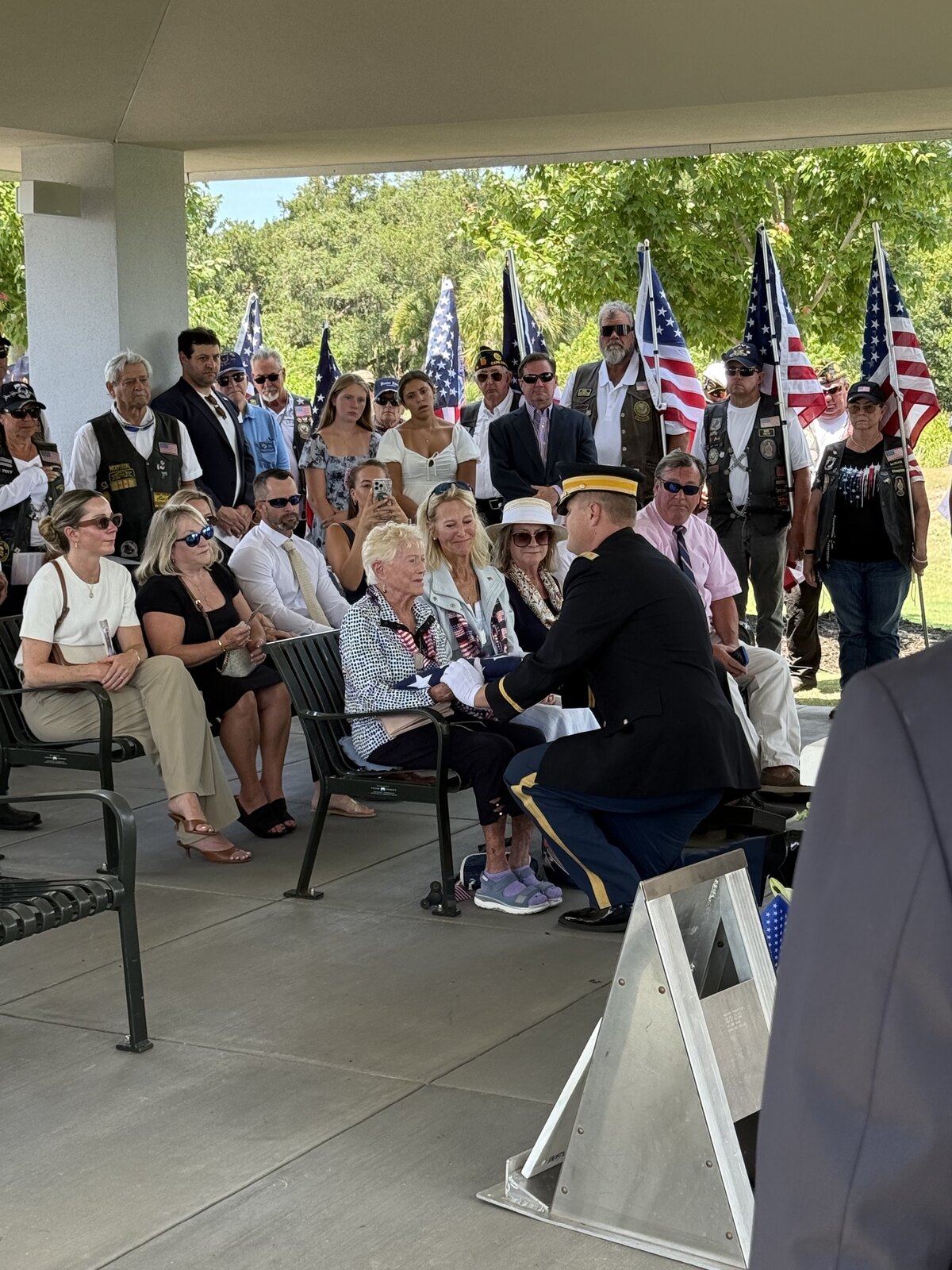
The Kassel Mission of Sept. 27, 1944 was not only one of World War 2's most spectacular battles, it was also one of the most unusual, in that it took place between 20,000 and 26,000 feet above what would become the dividing line between East and West Germany. As a result, half of the 25 bombers that were shot down crashed east of the border, and the crash sites were not accessible to anyone from the West until the German reunification in 1990. Of the 117 American airmen who died in the battle, eight were still listed as Missing in Action, including five from the Hansen crew. Just recently, the DPAA (Defense POW/MIA Accounting Agency) announced that through advanced DNA testing of remains, it has identified two of those crew members, Technical Sergeant James Triplett of Spokane, Washington; and Second Lieutenant Porter Pile of Harlingen, Texas. The two will be interred at Arlington National Cemetery in a special ceremony on October 31. In this episode of the Kassel Mission Chronicles, hosts Linda Alice Dewey and Aaron Elson discuss the efforts of the Kassel Mission Historical Society to reach out to family members of airmen who perished on the flight, and to coordinate with the DPAA on several active cases involving the six remaining MIAs. In addition, Aaron shares a recording of P-51 pilot Bob Volkman who tells of a dramatic dogfight between fighter pilot Bill Beyer and a noted German ace. Thank you for listening, and be sure to visit the Kassel Mission web site, kasselmission.org. Also look for Aaron's oral history of the mission, "Up Above the Clouds to Die," available at amazon and aaronelson.com; and check out Linda's great artwork at LindaAliceDewey.com, where you can order notecards, calendars and many other items featuring pastels of Leelenau County, Northern Michigan and Arizona.
Of all the tragedies surrounding the ill-fated Kassel Mission of Sept. 27, 1944, this one is still ongoing. Lt. Raymond Ische, the lead navigator for the 445th Bomb Group that day, remains MIA, and may still be buried in German soil. In this episode of the Kassel Mission Chronicles, Linda and Aaron discuss the search for Lieutenant Ische with MIA investigator Robert Rumsby.