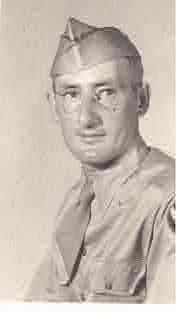
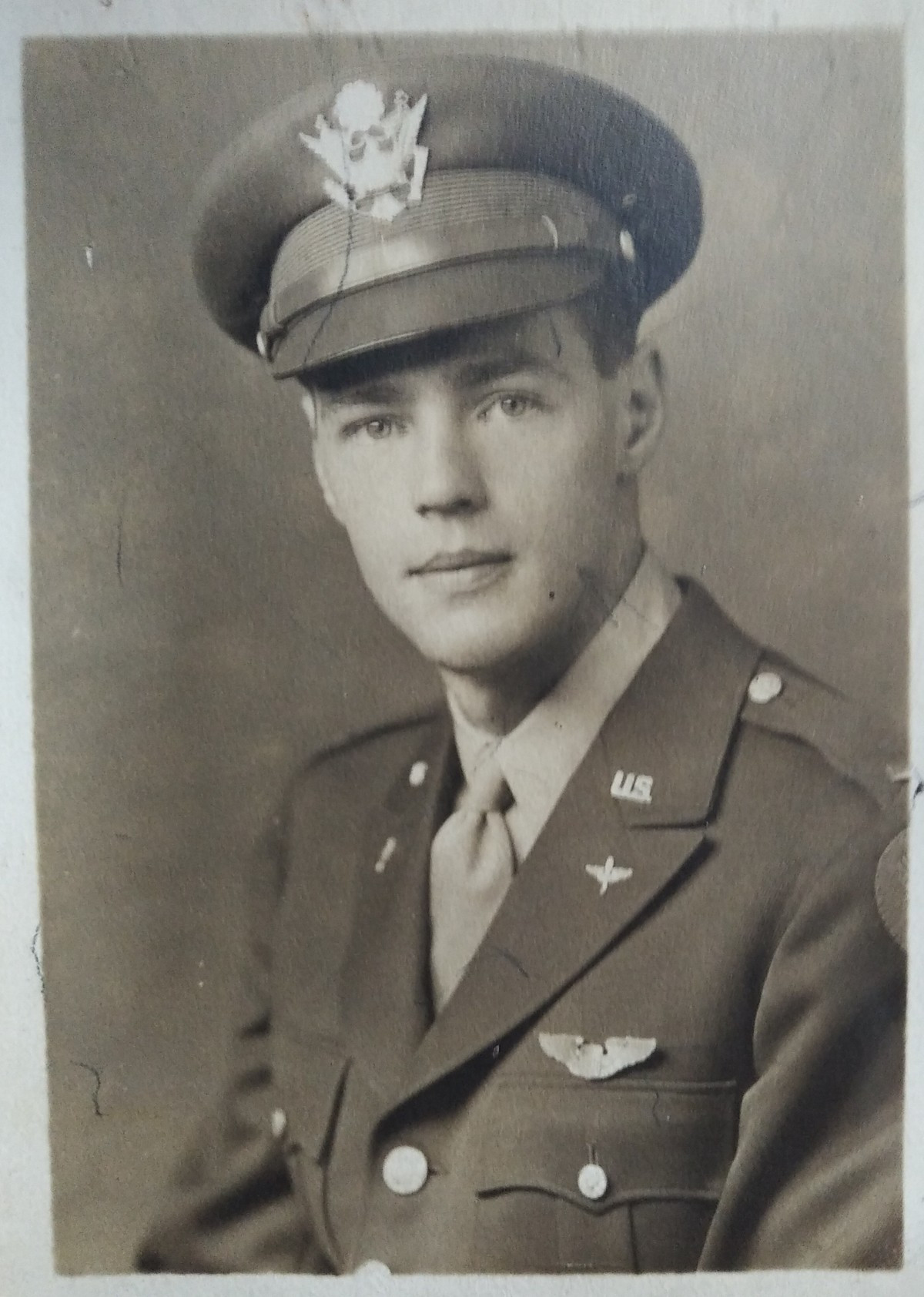
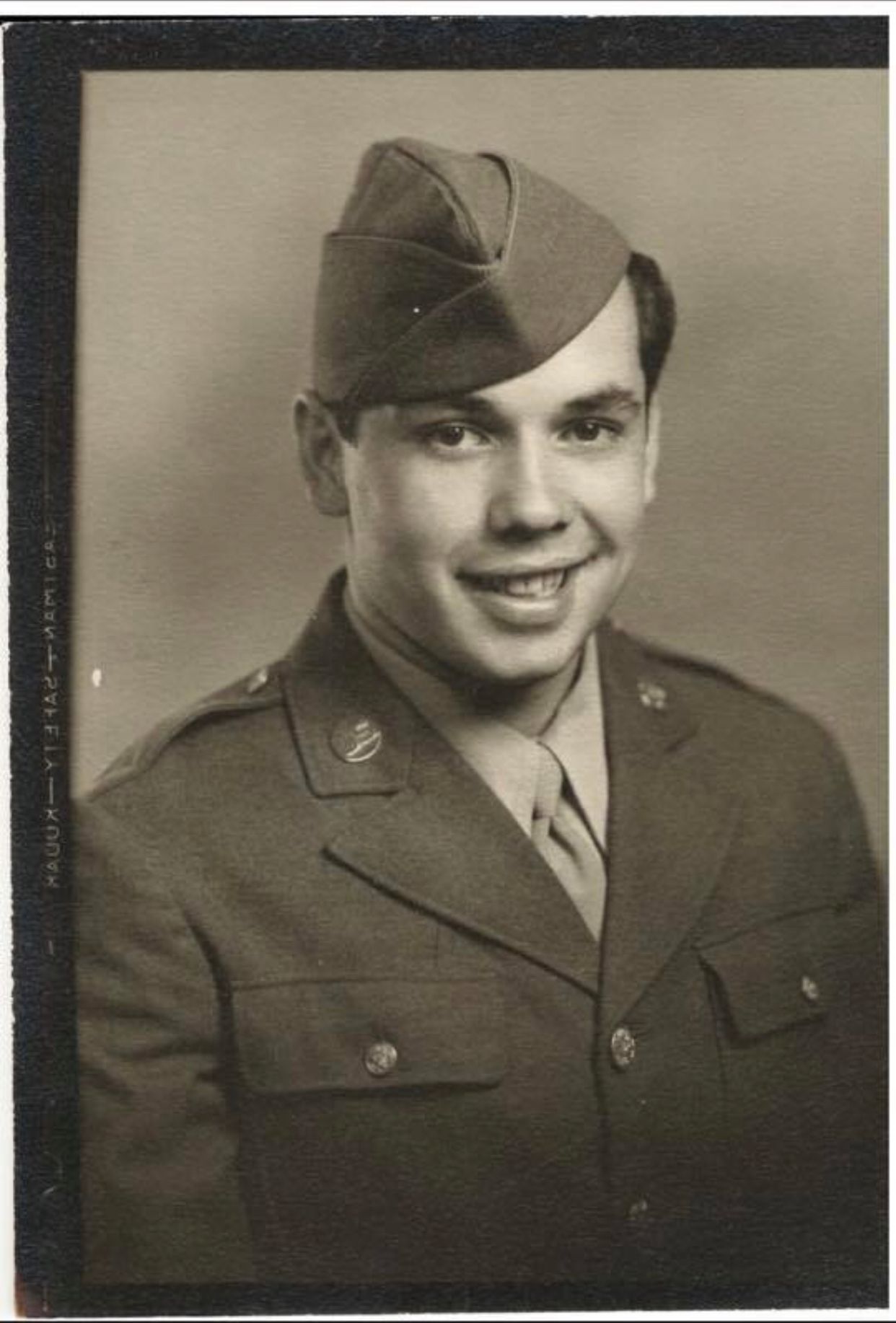
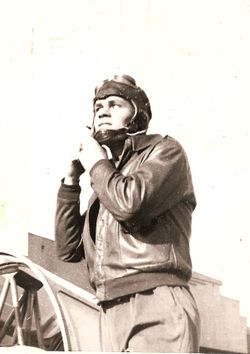
On the morning of 27 September 1944, 1st Lt. Edgar N. Walther lifted his B-24J Liberator off the runway at Tibenham bound for Kassel on what the men had been told would be a “milk run.” Walther flew deputy lead, tucked in as 1st Lt. Reginald Smith’s right wingman and riding last in the high-high-right squadron — the most exposed slot in the formation. When a navigational error carried the 445th away from the bomber stream and its fighter escort, more than a hundred German fighters fell on the isolated group, and in minutes the squadron was annihilated around him.
Walther himself never saw the end. His account, preserved in Missing Air Crew Report #9383, is one of the most haunting documents in the Society’s files precisely because of what he could not remember:
“I suffered a brain concussion and amnesia for five days. I awoke in a German prison hospital and discovered that I had received a bullet in my right elbow and torn ligaments in my right knee. To this day I have no knowledge of the accident. My opinion is that the ship blew up and I was thrown clear … That is absolutely all I can honestly recall about this mission or the fate of my fellow crewmen.” — 1st Lt. Edgar Walther, MACR #9383
The blast that erased Walther’s memory was triggered by a fighter that struck the tail; the explosion hurled the wounded pilot clear of the disintegrating aircraft, and he came down by parachute to be taken prisoner. The bomber crashed in the fields and orchards above Lauchröden, in the Werra valley. On the back of his casualty questionnaire, in a shaky hand, Walther listed his nine crewmen by name and wrote three stark words across the page: Plane blew up. What he did not yet know was that every other man aboard had died.
A German eyewitness gave the Society the view from the ground. Horst, fifteen years old and working the fields near Lauchröden that day, was found decades later standing in the very field where the ship came down: “It was a cloudy overcast day and we could not see the planes until they dropped from the sky and we heard the firing of their guns. Pieces of planes, bodies … men with and without parachutes coming down.”
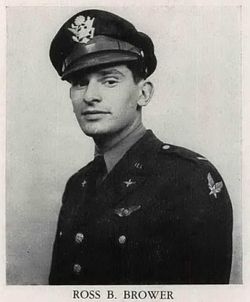
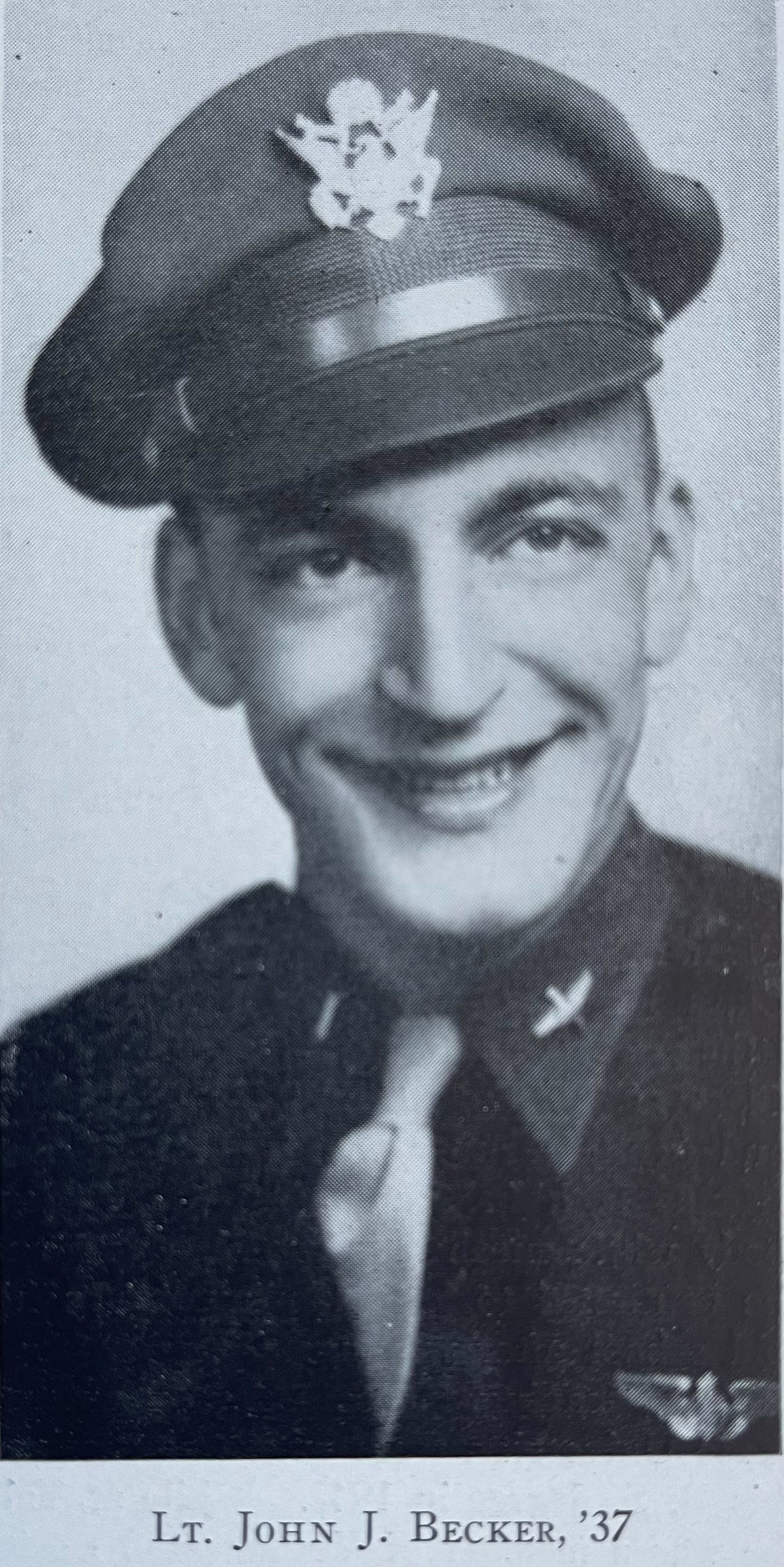
The dead — co-pilot Martin Geiszler Jr., navigator Ross Brower, bombardier John Becker, nose gunner Kenneth Meeks, top-turret gunner Richard Vernor, radio operator Glenn Bergquist, waist gunners John Wise and Norman Hollis, and tail gunner Milo Mann — were gathered and buried in a common grave at Lauchröden. They were young men with whole lives sketched out: Geiszler, just 21, killed on his fifteenth mission, left a fiancée in Los Angeles; waist gunner John Wise, 28, dreamed of a farm or orchard and had written home only weeks earlier, “It would be nice to get home by Christmas.” In an earlier, happier photograph the ten men lounge across the wing of a Liberator chalked “The Bird and the Boys,” every signature still legible. Edgar Walther alone survived to carry the question that titles his account — What happened?
Sources: Edgar Walther casualty statement, MACR #9383 (handwritten original and 8th AF News reprint); German crash-data sheet for #44-10490 (courtesy Walter Hassenpflug); “Uncle John F. Wise” family memoir incl. the “Horst” eyewitness account; Bell, California clipping on Martin Geiszler; Rutgers College memorial for Ross Brower. KMHS archive.
B-24J #44-10490 (Hardstand 39) "Jane" Call Letter Z+ (Zebra)
LEAD ELEMENT

Crashed at Lauchroden, Germany - MACR 9383