
The inaugural (revived) edition of the Kassel Mission Chronicles. Coverage of the 1996 Dayton 52nd-anniversary reunion, plans for the 1997 Harrisburg/Hershey reunion and the transition from KMMA to the new Kassel Mission Historical Society, plus firsthand accounts including "The Saga of Terrible Terry's Terror," "Reaction to a Tragedy," and "Day of Atonement."
Download the original newsletter (PDF)THE KASSEL MISSION, CHRONICLES NEWSLETTER
SPRING / SUMMER 1997
Welcome, One and All!
AT THE 52ND ANNIVERSARY Meeting of the Kassel Mission at the U.S. Air Force Museum last September, we promised the members of KMMA that we would issue two newsletters in 1997. Here is our first newsletter edition. If you like it, let us know! We plan to print your fall edition in November.
Next September 24th through 28th, the 2nd Air Division Midwest/East Regional Reunion will be held at Harrisburg/Hershey, Pennsylvania. On the 53rd Anniversary of the Kassel Mission, Saturday Afternoon, September 27th, KMMA will hold its last meeting. At that time KMMA’s gavel will be passed to the Kassel Mission Historical Society President Doug Collar. KMMA will be dissolved at the end of 1997, and all funds in the KMMA account will be turned over to KMHS. Our sons and daughters in the Historical Society will continue the work of KMMA, with an Advisory Board of Kassel Mission Veterans.
The Reunion promises to be an outstanding event. 445th veteran Ray Souders has lined up a great schedule. For the first 47 Early Birds arriving Wednesday night, Ray has planned a deluxe coach ride Thursday morning to GETTYSBURG and a full day’s tour conducted by the best Civil War guide in America. John Heiser is an expert historian of CIVIL WAR BATTLEFIELDS, an avid World War II History buff, and currently Facilities Manager for the Gettysburg Battlefield National Park. Registration Day is Thursday, and a Welcome Reception is scheduled Thursday evening.
Friday’s optional features include another excursion to Gettysburg for those who couldn’t make it Thursday. Or, choose a trip to Lancaster and Strasburg, with its excellent tourist railroad and the Pennsylvania RR Museum, and an Amish community tour. Reception and dinner follows Friday night. Saturday morning you will be treated to a trip to nearby Hershey’s Chocolate World. The KMMA/KMHS Meeting is Saturday afternoon, previewing “PRIDE OF THE NATION”, the new Kassel Mission Documentary, which Joe Dzenowagis completed by a very enjoyable and enlightening date. The UNITED STATES AIR FORCE BAND will provide entertainment after the Reunion Dinner on Saturday night. Truly a spectacular line-up that we hope most of you can attend! For information and reservations write: Ray F. Souders, Jr., 431 Lewisberry Road, New Cumberland, PA 17070.
William R. Dewey, President — P.O. Box #413, Birmingham, MI 48012
George M. Collar, Vice President-Historian — 399 Melmore Street, Tiffin, Ohio 44883
Reginald R. Miner, Vice President — 1084 W. Lake Road, Branchport, NY 14418
Frank J. Bertram, Director — 20016 Greenview Drive, Woodbridge, CA 95258
Henry W. Dobek, Director — P.O. Box 624, Naples, ME 04055
Web Uebelhoer, Director — 14108 Circle Ridge Drive, Sun City West, AZ 85375
KASSEL MISSION CHRONICLES NEWSLETTER — William R. Dewey, Editor. Mary Beth Barnard, Contributing Editor. George M. Collar, Contributing Editor.
The Kassel Mission Memorial Association was incorporated in the State of Michigan 16 May 1989 as a non-profit corporation, and was certified as a Federal Income Tax-exempt 501(c)(19) Veterans’ Organization 29 Jan 1990. Purposes of the Kassel Mission Memorial Association are: 1. To perpetuate and promote the memory and history of the Kassel Mission of 27 September 1944 by the 445th Bomb Group of the 8th Army Air Force, 2nd Bomb Division, 2nd Combat Wing. 2. To fund and dedicate one or more memorials to the Kassel Mission at appropriate locations. 3. To publish and promote books, articles, and video productions about the Kassel Mission and the 445th Bomb Group, Tibenham, England, in World War II.
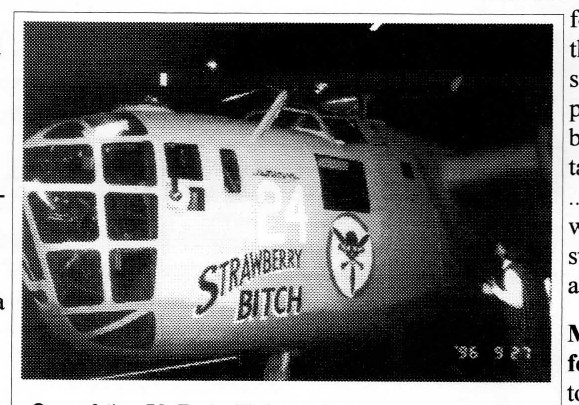
As reported by KMMA Vice President/Historian George Collar in the 2nd Air Division Spring 1997 “Journal”, the 52nd Anniversary Commemoration of the Kassel Mission was held on September 27, 1996, at the Air Force Museum, Wright-Patterson AFB, Dayton, Ohio. 225 people participated in the activities, which included an Early Bird Bus to the AF Museum from the Dayton Marriott for 50 veterans and families who wanted to crawl through the “Strawberry Bitch”, a fine example of our combat bombers.
Kassel Mission survivors have been invited to be honored at the 1998 Second Air Division Convention at Oak Ridge Resort near Chicago.
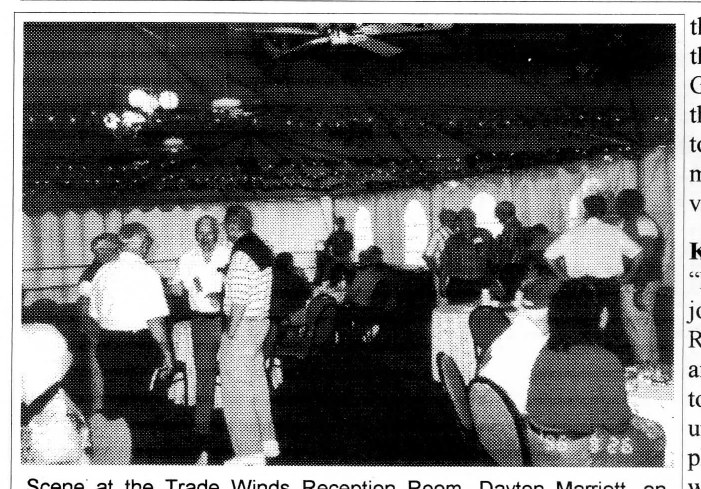
Thanks to all of you who expressed your appreciation for the Anniversary Meeting. Following are some of the remarks:
Orville and Pearl Baker: “a very enjoyable and enlightening Dayton Reunion...”
Paul Dickerson: “Thank you for a most outstanding Reunion...I deeply appreciated the invitation and the opportunity to share at the Reunion. So many shared so much about their beliefs, their time in the service and their experiences. I especially enjoyed sharing with the POW’s. I spent a considerable amount of time with Walter Hein and really enjoyed it....I came away from the Reunion renewed and invigorated....”
Don Myers: “thank you for a wonderful Reunion...”
Kay Brainard Hutchins: “Brother Bill and I fully enjoyed attending the 445th Reunion...that get-together around the pool really topped off the Reunion...I’m sorry more people didn’t know about it...it was worth losing the sleep!...”
Gene George: “The Reunion was great...for some time I had been looking forward to visiting the Dayton Museum, which proved to be far beyond all expectations. One could spend three weeks there and still not see it all...”
Alice & Harry Tachovsky: “would like to express our deep appreciation for a fabulous KMMA and 445th BG Reunion in Dayton, Ohio.....”
Fred McConnell (389th BG): “truly a pleasure to be just a small part of the 2nd Air Division-Kassel Mission Reunion in Dayton...excellent festivities, yet a sober reminder of that fateful mission.”
Margaret Schaffer: “I just wanted to tell you how much I enjoyed the 52nd Anniversary of the Kassel Mission. Many thanks to ... all who made this event possible...”
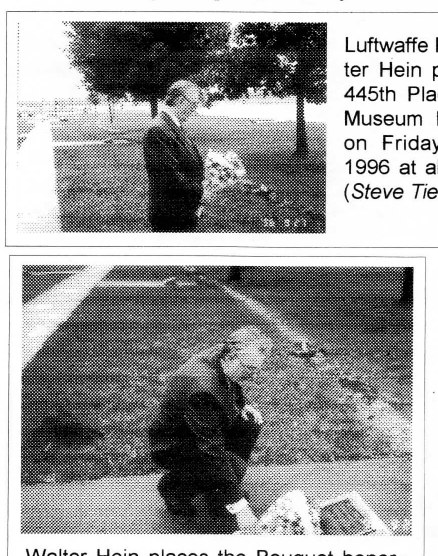
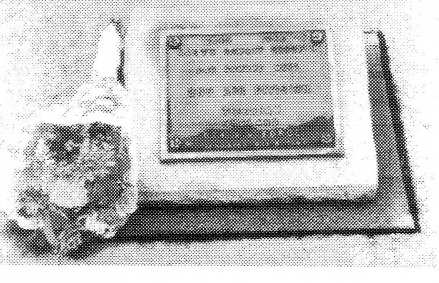
Walter Hein: “Thank you again for the invitation to Dayton...I have never received such class treatment from the moment I checked in until I departed, thanks to you and the 445th membership. Their enthusiasm and cordiality and friendliness made this a memorable weekend that I shall never forget. I spent, as many others on both sides, the best years of my life during the war, and you can easily imagine my emotion to see the old planes at the museum. Flying is what brought us together. As a fighter pilot I consider as my brothers, all flyers of the United States Air Force. So, with you and all members of the 445th BG I feel at home...” (Luftwaffe pilot veteran Walter Hein.)
“B-24 LIBERATOR; A MAN’S AIRPLANE” —by William Carigan—from Aerospace Historian, March, 1988
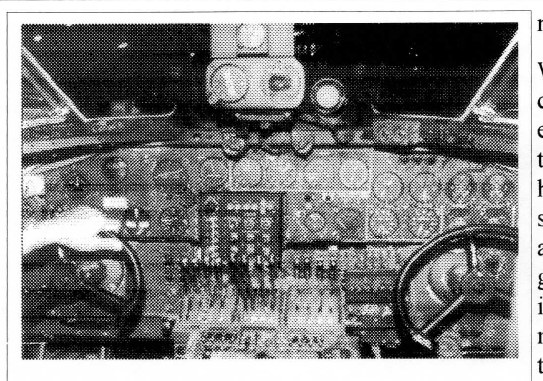
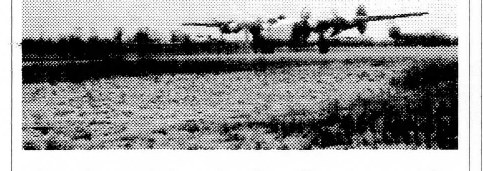
WHATEVER ELSE IT IS, the B-24 Liberator is a man’s airplane, sternly unforgiving and demanding, sometimes super human strength, always requiring considerable muscle. Heavy on the controls, the airplane tires the strongest teams of pilots on long missions. With an engine feathered, the airplane requires constant pressure on the opposite rudder pedal, in addition to full trim tab. When you are five hours from the nearest friendly base, the prospect is dismaying. Holding the pressure steadily on the rudder pedal for forty-five minutes sets the best-conditioned pilot’s leg to trembling with fatigue.
Though the pilot usually dislikes the idea, he has the crew lift the inoperative copilot from his seat and replaces him with the flight engineer. With luck, the aircraft is now at low-enough altitude for the pilot to remove his oxygen mask, smoke if he has ‘em, and reflect on the glamour of his calling. But don’t relax too much. Here come the unfriendly fighters, which means the pilot must get back to work. Assuming luck, friendly fighters, and the lovely White Cliffs of Dover ahead, the pilot begins to believe that home is reachable. If he reaches that runway, he’ll probably drink his mission drink in one gulp, tell a wild story at interrogation, and fly another day.
Editor’s Note: The above was excerpted from AD LIB: Flying the B-24 Liberator in World War II, by the late William E. Carigan, Jr., who flew 50 missions as a copilot with the 15th AF. Publisher: Sunflower University Press, Manhattan, KS.
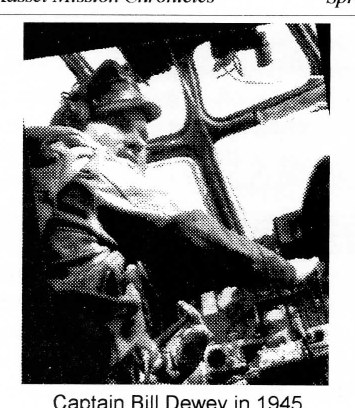
By William R. Dewey, Editor
AS I LOOK BACK AT THE TREMENDOUS enthusiasm and interest expressed during last September’s Dayton ‘96 Reunion, my only regret is that the program could not have been enjoyed by more Americans. Such an outpouring of appreciation for the combat veterans who put their lives on the line for their country flying those “B-crash-dash-24’s” was wonderful to observe and receive.
I have a deep conviction that this United States of America is the greatest nation in the history of the world. It is the Declaration of Independence that the Founding Fathers gave us, and incorporated into the original Constitution, that sets this nation apart from all others. The reasons so many brave Americans fought and died 27 September 1944 was for the United States of America and what it stands for: individual freedom. God bless America, and God bless all the military veterans that fought for her ideals in past wars, and those who serve her today!
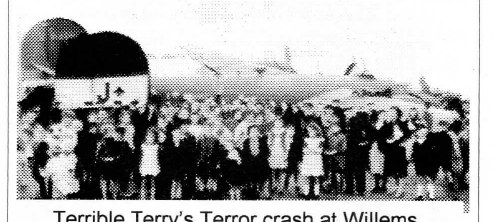
by Staff Sergeant Thomas G. Spera, Photo Observer on 700th BS B-24 42-94810 piloted by 1st Lt. William F. Hunter of Essex Junction, VT, on 27 September 1944. (Mary Beth Barnard sent this report to George Collar, who deciphered it and submitted it for the record.)
WE WERE ONE OF TEN CREWS out of thirty-five to get through a bitter battle fought four miles above Kassel, Germany. It all happened after we had dropped our bombs. Up until that time, I had chalked up the mission as a ‘milk run’. Then, suddenly, all hell broke loose, and the interphone was busy with urgent voices calling out formations of Focke-Wulf 190’s. From my station in the waist, I could see the air full of exploding shells. Then they came in, right through our formation. In less time than it takes to tell, the sky was full of debris from exploding ships.
The leading Liberator, on fire from nose to tail, came swinging toward us like a severely wounded animal, then peeled away as if to pick a spot away from us to die. Then we were hit ourselves. A 20-mm shell tore through the bomb bay, ripping off the doors and severing fuel lines. Two fires started simultaneously in the bay. The engineer, Technical Sergeant Robert N. Ratchford, threw off his parachute, grabbed a fire extinguisher, and put both fires out before the 100-octane gas had been ignited.
I gained consciousness to find the battle continuing. Seconds seemed like hours, minutes like days. Enemy fighters came rolling through the formation so close that one could almost see the color of the fighter pilot’s eyes. One wave of fighters followed another, until after six minutes, the attacks ceased as suddenly as they had started. Where there had been four squadrons of bombers before, now ten ships were all we could see. (We later learned that three landed in France, three crash landed in England, and only four made it back to the home field.)
An escort of P-51 Mustangs picked us up after a call from our radio operator. We were approaching a landing field in northern France when the second engine on our left wing cut out, and a third spit and sputtered. Our pilot, 1st Lt. William F. Hunter, cleared a clump of trees by inches, clipped a set of high tension wires, and brought the ship down on a potato patch, our only casualty a cut hand for the bombardier. Civilians from a nearby town, once they recognized us as Americans, stopped at nothing to make us comfortable.
George Collar’s Note: Lt. Hunter was awarded the DFC for his actions that day. Everyone mentioned in the above report is now deceased. All were killed on a raid to Germany on 9 March 1945, after being transferred to the 389th BG. They are buried in the Allied Cemetery at Margraten in The Netherlands.
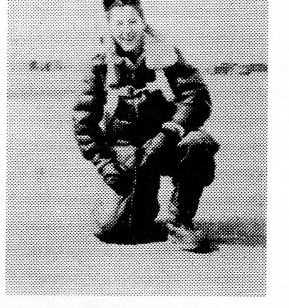
Those of us who survived the Kassel Raid of 27 September 1944, and became prisoners of war, often wondered what the reaction of those at our home base of Tibenham was, when so many of their friends did not return. The following letter from the late James Old (R/O on Captain Mainhood’s crew of 703 BS) describes the reaction to the tragedy. — George M. Collar, 702 BS.
In spite of the above, one day that has been with me, one day that left its indelible mark, and still haunts me, is a day that I did not fly. That day was 27 September 1944. Morning went to afternoon, the group was operational. Then things grew quiet — no return of the 445th. Then, from the line came the word: wipe out! It couldn’t be — more rumors, 25 out of 35, crash landings on the coast. By late afternoon we knew a tragedy had taken place, as the huts in the area stood empty. The group had disappeared! When I passed the chapel, I wondered how many had stopped in that morning for prayers. Most of all the Nissen huts were either empty or almost empty.
As I lay on my bunk that night and thanked the Guy upstairs that our crew had been spared this day, I thought of our crew, and our great pilot, John Mainhood. Most of all, I thought and prayed for the guys who went to Kassel that day. — Jim. (James E. Old, 22 October 1921 — 11 August 1996.)
James R. Wedemann, Joshua Tree, CA — November 9, 1991. Until I saw an article in the 2nd Air Division Journal, I had come to believe that the mission was purged from the record. I had never seen anything about it. But I know it happened—I was there! Not flying combat that day, we were a lead crew and had to “practice” that day. I still get a lump in my throat when I remember seeing only 4 aircraft come home. Thank you and God bless, James R. Wedemann, T/Sgt., 445th BG, 701 BS.
Virgil E. Trombly, Norwood, NY — December 18, 1990. How well I remember that terrible day in 1944. I can still see our C.O. standing up in the control tower, looking for his group. The planes that did come in (4, I think) were all firing red flares. What remains in my mind was the flight on the following day — a maximum effort mission (11 planes), and right back to Kassel. The silence that hit when they announced that mission will always remain with me. As it turned out, it was a “milk run” with fighter protection that wouldn’t quit. With warm regards, Virgil E. Trombly.
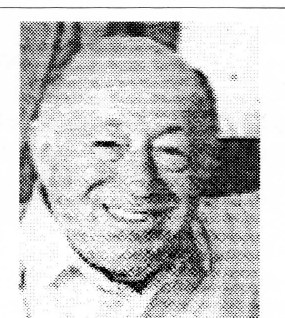
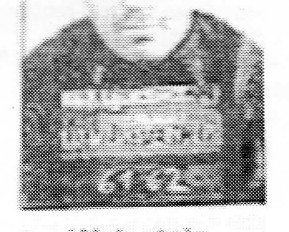
IRA WEINSTEIN STOOD ON TIP-TOES to shave his chin; Ira Weinstein was barely five feet tall, and proud of every inch. It was Tuesday, September 26th, the Day of Atonement. First Lieutenant Ira Weinstein led a small and disorderly platoon of worshippers to the Norwich Corn Hall. The hall was crowded with Americans in uniform. Afterwards, Weinstein turned cheerfully to another officer: “Now that I’ve atoned for those seventy-seven sins, I can be bad until this time next year. I wonder if I have to fly tomorrow.” He phoned the base, and found that he did. Ira Weinstein flew the next day, September 27th, 1944. He did not come back. He flew in a ten-ship squadron in which all the men and planes were from the 702nd. One ship returned. The rest were shot down by German fighters.
Only four of the Group’s original thirty-five planes returned to the field; three crashed on the Continent, and three crashed in England. Lt. Stanley E. Krivik — the only man from the 702nd who returned — told how the Group had been separated from the main bomber stream and gone too far into Germany. He told how, suddenly, more than a hundred German fighters tore through the formation from behind. He saw one B-24 after another spin down, some on fire, some wildly out of control. After being thrown through the Plexiglas canopy and lying stunned on the ground, Krivik picked himself up and crawled back into the burning, exploding wreckage to pull three of his crew members out. He was awarded the Soldier’s Medal. But he knew that all the medals in the War Department could not replace his navigator, who was killed in the crash.
“ENEMY REACTION TO ONE GROUP WAS INTENSE,” said the official teletype. “25 AIRCRAFT WERE LOST TO THIS ATTACK.” That, and nothing more. There was no room in the official teletype for the great emptiness. (Editor’s Note: submitted by Ira Weinstein, secured from the archives; no author’s name was indicated on the original.)
Text and photographs recreated from the original newsletter; some scanned text may contain minor OCR artifacts. The complete original is available as the linked source PDF above.